Shinta Mani Mustang – A Bensley Collection

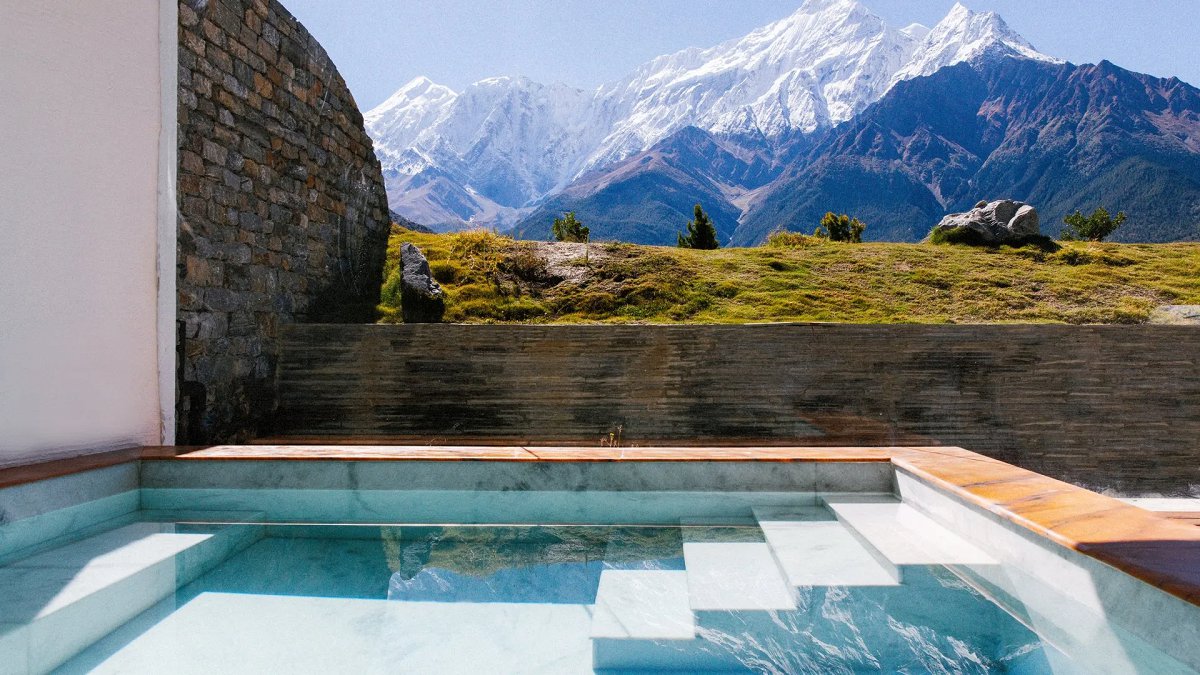
“Stone-walled suites with floor-to-ceiling windows frame the dramatic peaks of the Nilgiri Himal in the former kingdom of Mustang.”

Our Review

Setting & Arrival

Set at roughly 3,000 meters in the Kali Gandaki valley, this high-desert outpost gazes directly at the snow-banded Nilgiri massif. A short flight from Pokhara drops you in Jomsom; from there, a rugged climb brings you to a mountainside perch where wind sculpts the slopes and the light shifts from copper to pearl across the ridgelines. The scene marries Himalayan drama with rain-shadow minimalism—bare, wind-scoured hills giving way to distant glaciers and monastery dots on the horizon.

Design & Sense of Place

Originally conceived in a U-shaped form with local stone and timber, the architecture nods to Thakali traditions while interiors add playful, place-specific layers—warm, earthy textiles, polished dark woods, and artworks that trace Mustang’s vernacular forms. Up close, the details tell the story: yak-hair textures, Tibetan-tiger motifs underfoot, and sculptural accents that echo fossils and prayer-scroll curls. Step outside at dusk and the terrace fire pits make an amphitheater of stars; step back in and the lodge’s warm palette catches the last pink wash on the peaks.

Suites & Views

The lodge has 29 suites, each generously proportioned and framed by floor-to-ceiling mountain panoramas. Mornings are for drawing the curtains and letting Nilgiri fill the room; evenings are for steeping in deep bathtubs edged with rose-tinted salt bricks while the ridge line fades to indigo. Furnishings mix tactile comfort with regional personality—felt throws, carved timber, and the occasional yak-hair-topped stool—so the rooms feel both cocooning and unmistakably of this region.

Dining & Bar

Meals lean into place. Breakfasts might land al fresco with orchard-fresh apple juice, house granola, and fruit platters that taste of altitude and sun. Evenings pivot to the Nilgiri Restaurant where themed menus spotlight Himalayan ingredients—jimbu (mountain herb), timur (Nepali pepper), and locally foraged greens—set against modern plates like pan-roasted meats or mushroom risotto. Treks are punctuated by roving picnics—on a lakeside ledge, a village rooftop, or a terrace above the gorge—so lunch often doubles as a lookout. Post-hike, the Aara Bar becomes a snug with panoramic windows and signature cocktails (including a nod to the valley’s namesake) alongside regional spirits and warming brews.

Wellness, Culture & Adventure

Wellness here pairs contemporary comforts—steam, sauna, and plunge—with traditional Himalayan healing at the SoRiG Spa. Guests consult an amchi (Tibetan medicine practitioner) for pulse-led, herb-based therapies designed to rebalance wind, heat, and phlegm energies; massages and cupping draw on centuries-old practice while you look out at the Nilgiri range. Movement is built in too: guided hikes thread to monasteries, caves, and high lookouts; other options include horse-riding across riverbeds, archery, mountain biking, and unhurried yoga or breathwork when the wind drops.

The programming favors immersion over checklist. Days might begin with prayer-wheel villages and end with stargazing by the fire; lunches rotate through village homes and scenic perches, weaving local kitchens into the experience. The lodge’s format—an all-inclusive, five-night baseline—keeps logistics invisible, freeing time for altitude pacing, cultural depth, and simply watching the weather write new stories on the mountains.

Verdict

Shinta Mani Mustang – A Bensley Collection reframes Himalayan travel as a slow, design-forward expedition: a base camp of comfort that points you outward to valleys, monasteries, and sky, and inward via traditional diagnostics and heat-and-herb therapies. Come for the views and considered cuisine; stay for the way the place recalibrates your sense of scale. In a region long known to hardy trekkers, this property offers a richly local, luxuriously pared-back way to experience the “windy valley”—with the peaks as constant company.

Select Amenities & Features

Free Wi-Fi Free Wi-Fi
Spa & wellness Spa & wellness
Room service Room service
Laundry & dry cleaning Laundry & dry cleaning
Airport transfer Airport transfer
Bar Bar
Restaurant Restaurant

Please note: This is not an exhaustive list of amenities.

Location

How to Get There

By Air
  • (KTM) Tribhuvan International Airport, Kathmandu: main international gateway; fly to Pokhara (~25 minutes), then onward to Jomsom Airport (~15–20 minutes, conditions permitting). Total travel time ~4–6 hours including transfers.
  • (PKR) Pokhara Airport: domestic flight from Kathmandu (~25 minutes); followed by short flight to Jomsom (~15–20 minutes) or road transfer to resort (~5–6 hours, ≈150 km). Jomsom flights operate early morning due to afternoon winds, mainly mid-March to early June and mid-September to early December.
  • (JMO) Jomsom Airport: local airstrip; short transfer to resort by vehicle. Weather-dependent operations; delays common due to mountain conditions.
By Road
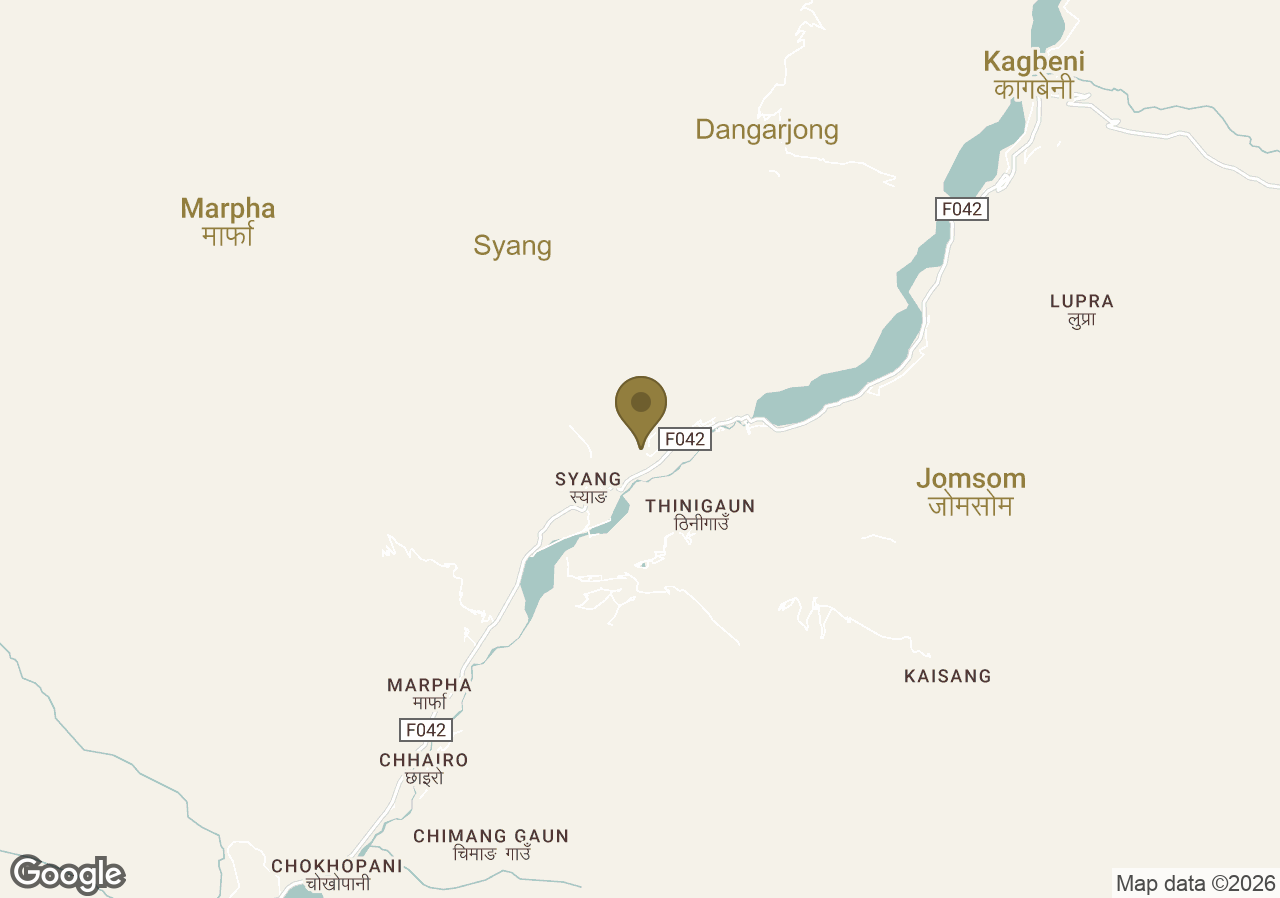
  • From Pokhara: ~5–6 hours by private vehicle (≈150 km) via scenic Kali Gandaki River route. Mostly blacktopped road with approximately 15–20 km off-road section between Beni and Kagbeni. Highly weather and season dependent; roads can be challenging during monsoon (July–August).
By Helicopter/Charter
  • Private helipad on-site at Shinta Mani Mustang. Direct helicopter from Kathmandu to resort: ~45 minutes with aerial views of the Himalayas. Helicopter from Pokhara to Jomsom: ~30 minutes. Advance arrangement required; weather dependent.

Note: Travel times are approximate and may vary with weather, season, and road conditions. Jomsom is located at high altitude (≈2,700 m); guests should be prepared for altitude considerations.

Nearby Places & Attraction

Mustang Eco Museum (Jomsom)
  • Small museum near Jomsom Airport with exhibits on Mustang’s culture, ecology, fossils, and herbal medicine.
  • Distance: ≈1–2 km
  • Mode: walk; ~10–20 minutes
  • Best time: late morning–afternoon
  • Tip: Combine with a stroll along the airstrip viewpoint for Nilgiri and Dhaulagiri vistas.
Marpha Village
  • Traditional Thakali village known for stone-paved lanes, whitewashed houses, and apple orchards along the Kali Gandaki.
  • Distance: ≈7 km
  • Mode: car/jeep or walk; ~20–30 minutes by road, ~1.5–2 hours on foot
  • Best time: morning or late afternoon
  • Tip: Walk one way via Thini/Chhairo to avoid traffic and enjoy riverside views.
Kagbeni
  • Historic village at the confluence of the Kali Gandaki and Jhong; traditional gateway to Upper Mustang with monasteries and alleyways.
  • Distance: ≈10–11 km
  • Mode: car/jeep; ~30–45 minutes (road conditions permitting)
  • Best time: morning (clearer views, lighter winds)
  • Tip: Carry ID; occasional checkpoints verify ACAP permits on this corridor.
Dhumba Lake (via Thini)
  • Turquoise alpine lake beneath Mt. Nilgiri; a gentle hike via Thini village with broad valley views.
  • Distance: ≈5.5–6 km
  • Mode: walk/trek (or short drive + walk); ~1–2 hours on foot
  • Best time: morning or late afternoon (calmer winds, softer light)
  • Tip: Start from Jomsom bus park, cross the bridge toward Thini, and follow local signs.
Muktinath Temple Area (Ranipauwa)
  • Pilgrimage complex for Hindus and Buddhists with mountain panoramas above the Jhong valley.
  • Distance: ≈23–25 km
  • Mode: jeep/bus; ~2–3 hours (traffic/road dependent)
  • Best time: early morning (clear skies, fewer crowds)
  • Tip: Expect rough, bumpy sections; layer up for cooler temperatures at altitude.
Rupse Falls (Dana, Myagdi)
  • Roadside waterfall on the Beni–Jomsom route near the deepest section of the Kali Gandaki gorge.
  • Distance: ≈40–48 km
  • Mode: car/jeep; ~2–3.5 hours (conditions permitting)
  • Best time: Oct–May for clearer roads; avoid heavy rain periods
  • Tip: Surfaces can be slick; keep a safe distance from spray near the roadside.

General Tip: Afternoon valley winds in Jomsom often strengthen; plan road trips and hikes for the morning and keep buffer time for weather or checkpoint delays.

Seasonality Overview

Peak
  • Mar–May and Sep–Nov bring clear skies and views.
  • Trekking conditions are stable; demand and occupancy typically highest.
Shoulder
  • Jun is warm with longer days and some cloud build-up.
  • Moderate demand; some itineraries adjusted around early monsoon conditions.
Low/Off
  • Jul–Aug closed for guests due to monsoon-related road risks.
  • Dec–Feb are cold, quieter months with lower overall demand.

Note: Month windows are indicative and may change year to year.

Other Information

Theme: Mountain, Hills, Wilderness, Desert, Countryside, Healing & Wellness
Check-in time: After 10:00 AM
Check-out time: Until 10:00 AM
Number of rooms: 29

Explore More Hotels