

Six Senses Thimphu

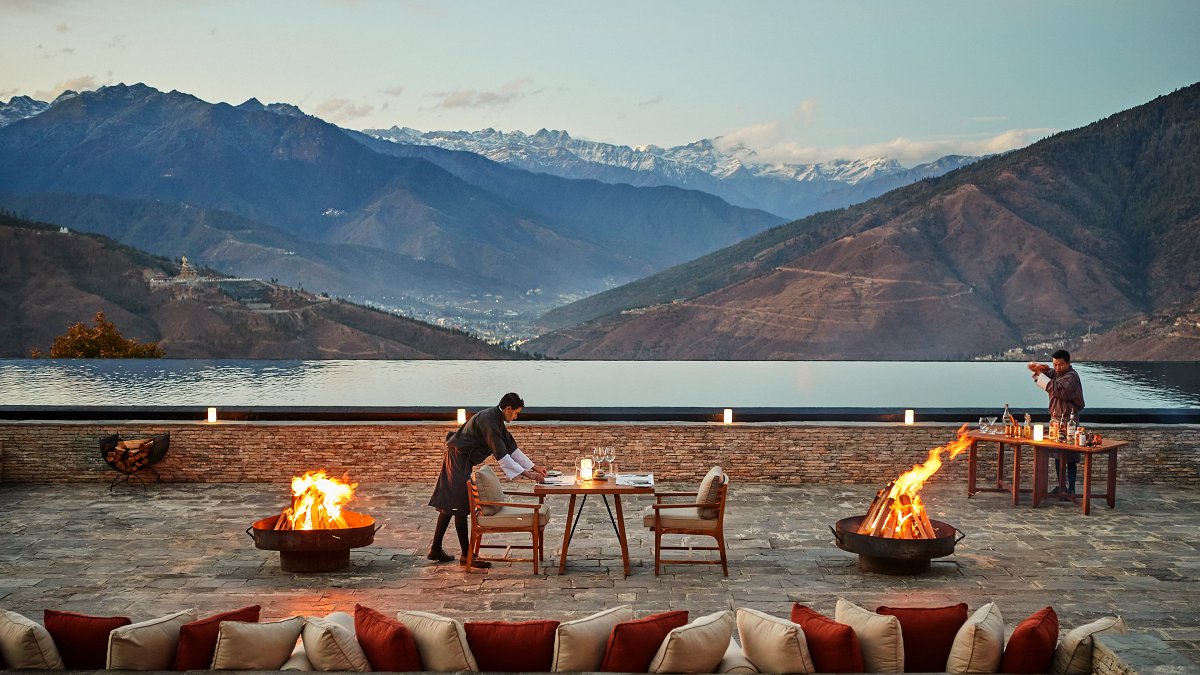
“Set high in the Thimphu valley, the lodge's stone courtyards look toward the giant Buddha Dordenma.”

Our Review

Setting and First Impressions

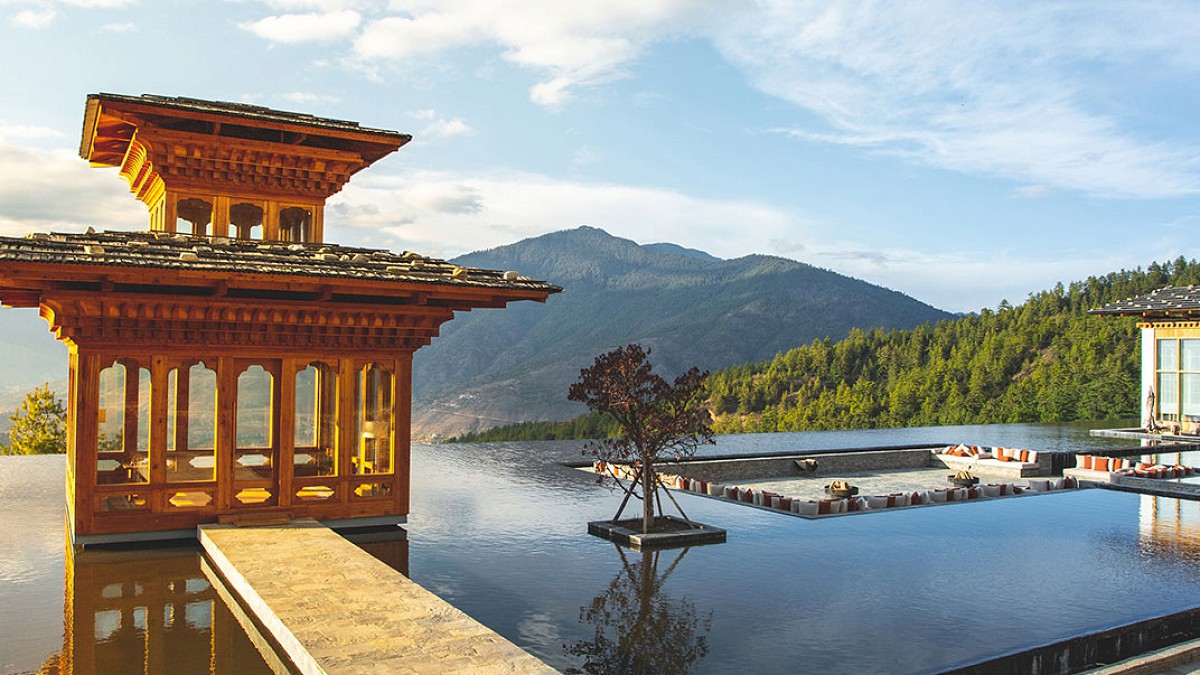
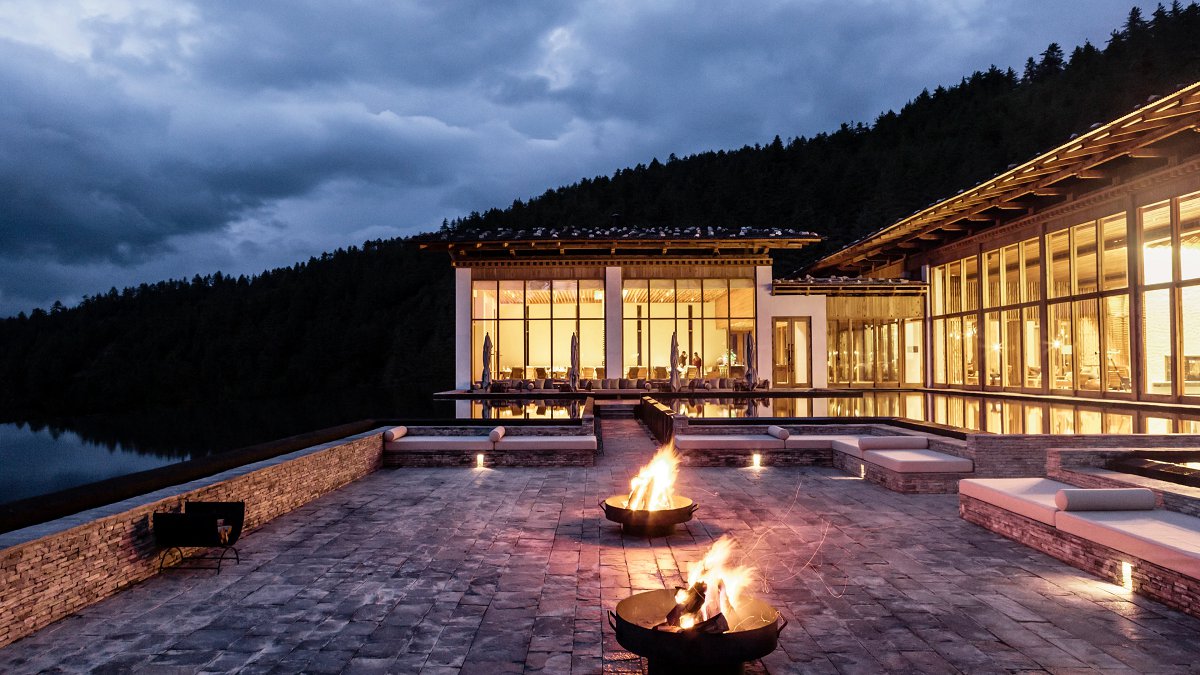
Perched high above the capital in a pine-clad valley, Six Senses Thimphu frames sweeping Himalayan views from the moment you step into its light-filled pavilion. Often called the “Palace in the Sky”, the lodge occupies a serene hilltop position that feels removed from the bustle below yet remains a convenient gateway to Thimphu’s monasteries, markets, and craft ateliers. Vast panes of glass, generous terraces, and reflective water features draw the landscape indoors, setting an unhurried tone that suits Bhutan’s measured pace.

Architecture and Design

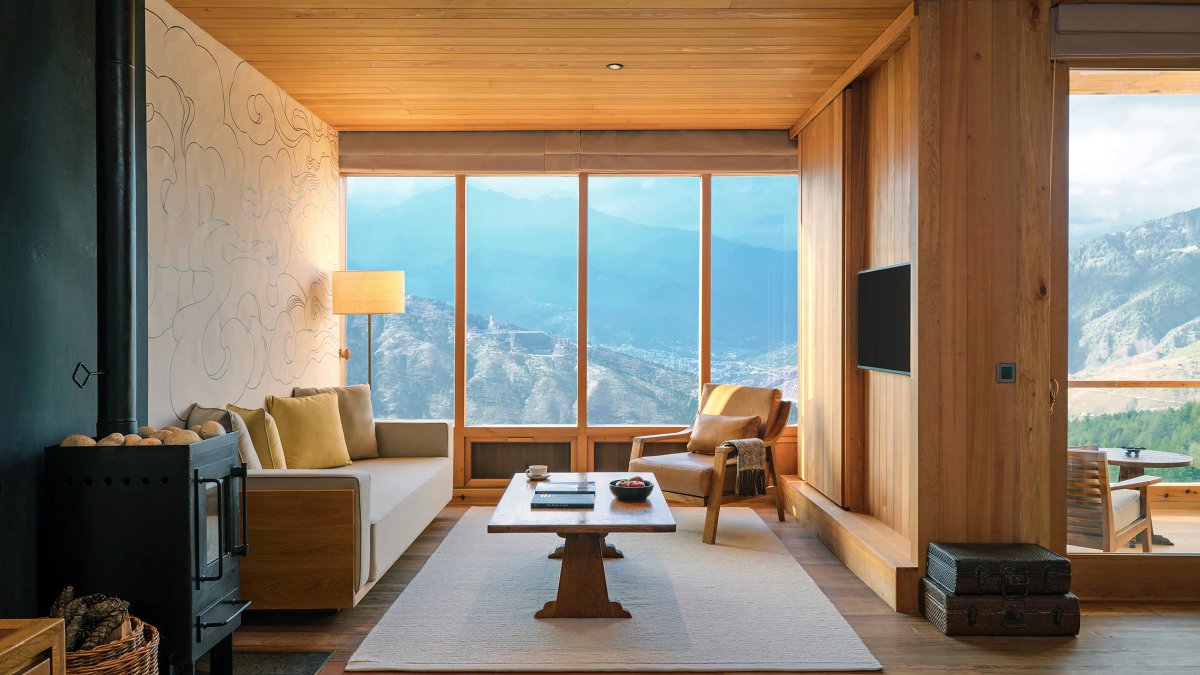
The property blends contemporary lines with Bhutanese vernacular—rammed earth textures, timber detailing, and dzong-inspired silhouettes—without slipping into pastiche. A pair of mirror-like ponds flanks the main pavilion, while timbered corridors and quiet courtyards create contemplative transitions between spaces. Interiors echo local motifs in subtle ways: cloud patterns on walls, handwoven rugs underfoot, and traditional bukhari stoves for winter warmth. The effect is calm, tactile, and deeply rooted in place.

Suites and Villas

The lodge offers 25 accommodations across suites and one- to three-bedroom villas, all oriented to mountain and valley views. Lodge Suites feel airy and restorative, with floor-to-ceiling windows, snug seating nooks, and generous bathrooms featuring freestanding tubs and double vanities. Villas add private gardens or decks for those seeking extra seclusion. Thoughtful touches—complimentary non-alcoholic refreshments, well-placed USB ports, and intuitive lighting—support comfort without intruding on the scenery.

Dining

The signature restaurant Namkha pairs valley panoramas with a seasonal menu that draws from the lodge’s organic gardens and local producers. Expect a balanced mix of Bhutanese and international dishes: crisp salads, warming broths, and plates that spotlight regional staples such as buckwheat and chilies. Classics like momos with fiery ezay, smoky trout, and hearty stews share menu space with lighter, produce-forward options. Breakfasts are particularly restorative, and the adjoining bar is a cozy perch for pre- or post-dinner drinks.

Wellness and Facilities

Wellness sits at the heart of the experience. The spa complex features an airy fitness room, yoga and meditation spaces, sauna and steam, and a striking indoor heated pool that seems to hover over the valley. Treatments blend modern techniques with Bhutanese traditions; don’t miss the dotsho hot-stone bath ritual after a day of hiking. The property also encourages gentle daily rhythms—guided stretching at sunrise, mindful breathing before dinner—that leave you feeling unhurried and well-rested.

Experiences and Sense of Place

Days unfold at an easy pitch. Within the grounds, guests can try archery on a lawn with mountain views or settle into a terrace for stargazing under clear night skies. In and around Thimphu, visits to craft workshops, monasteries, and the towering Buddha Dordenma offer cultural depth without long transfers. Many travelers pair a stay here with sister lodges in other valleys, creating a lodge-to-lodge journey that threads together forests, farm terraces, and high-country passes while keeping a consistent standard of comfort.

Sustainability and Practicalities

The lodge’s ethos mirrors the country’s stewardship of nature. Water is bottled on site, single-use plastics are minimized, and menus lean into seasonal, local sourcing. Bhutan currently levies a Sustainable Development Fee on international visitors; factor this into planning alongside transfers and guided excursions. Families are well considered with adaptable menus and activities that introduce Bhutanese culture in hands-on ways while keeping logistics seamless.

Verdict

This property delivers quiet drama rather than spectacle: reflective ponds instead of fountains, panoramic windows instead of grand statements. Service is polished and anticipatory—anchored by attentive GEM (Guest Experience Maker) support—yet never intrusive. If you’re seeking a base that distills Thimphu’s mountain light, Buddhist calm, and contemporary Bhutanese design into one cohesive stay, Six Senses Thimphu makes a compelling case—and an elegant starting or finishing chapter to a wider journey across the kingdom.

Select Amenities & Features

Free Wi-Fi Free Wi-Fi
Swimming pool Swimming pool
Ayurveda Ayurveda
Yoga Yoga
Spa & wellness Spa & wellness
Fitness centre Fitness centre
Room service Room service
Laundry & dry cleaning Laundry & dry cleaning
Airport transfer Airport transfer
Bar Bar
Restaurant Restaurant

Please note: This is not an exhaustive list of amenities.

Location

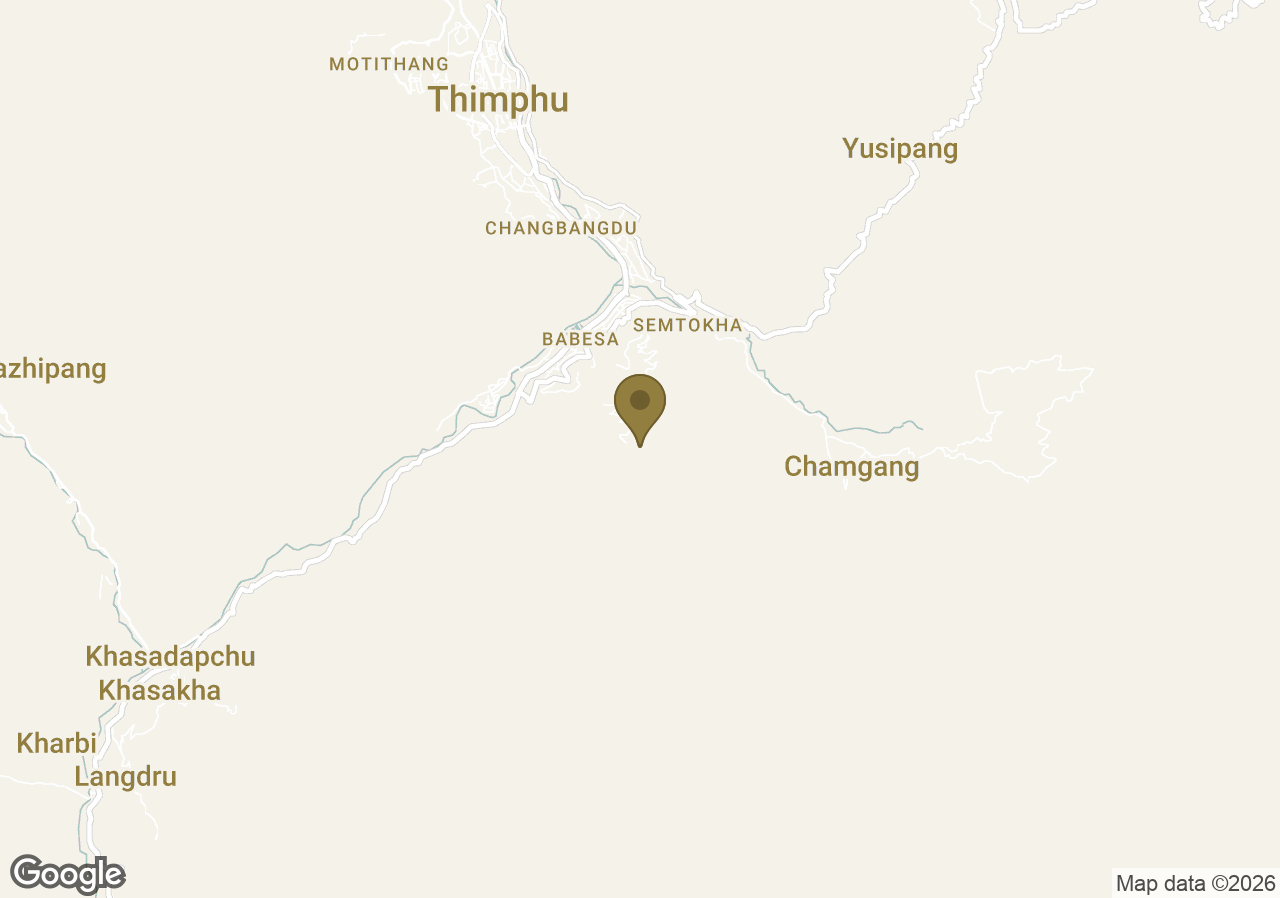
How to Get There

By Air
  • (PBH) Paro International Airport: closest gateway; ~1–1.5 hours by road to the lodge (≈50–65 km).
By Road
  • From Paro: ~1–1.5 hours (≈50–65 km), traffic dependent.
  • From Phuentsholing (India–Bhutan border): ~7–8 hours (≈175–180 km).
  • From Punakha: ~2.5–3 hours (≈75–80 km).
  • Mountain roads are winding; drive cautiously, especially at night.
By Helicopter/Charter
  • Nearest helipad: Thimphu Heliport (VQTU); charters available by prior arrangement; operations are weather dependent.

Note: Travel times are approximate and may vary with traffic and season.

Nearby Places & Attraction

Buddha Dordenma (Kuenselphodrang)
  • Hilltop bronze Buddha statue overlooking Thimphu with valley viewpoints.
  • Distance: ≈8–12 km
  • Mode: car; ~25–45 min (traffic dependent)
  • Best time: Early morning or late afternoon for softer light
  • Tip: Combine with a short walk around Kuenselphodrang Nature Park viewpoints.
Tashichho Dzong
  • Fortress-monastery housing the central monastic body and government offices; evening courtyard access on many days.
  • Distance: ≈7–10 km
  • Mode: car; ~20–35 min
  • Best time: Late afternoon to early evening (check visitor hours)
  • Tip: Wear modest attire covering shoulders and knees; carry a light layer for cool evenings.
Motithang Takin Preserve
  • Small wooded enclosure dedicated to Bhutan’s national animal, the takin, with short walking paths.
  • Distance: ≈8–11 km
  • Mode: car; ~25–40 min
  • Best time: Morning or late afternoon
  • Tip: Paths can be uneven; wear comfortable shoes with grip.
Royal Textile Academy of Bhutan
  • Museum and gallery showcasing traditional weaving, regional textiles, and cultural exhibits.
  • Distance: ≈7–10 km
  • Mode: car; ~20–30 min
  • Best time: Late morning to midday
  • Tip: Check weekly closure days and public holidays before visiting.
Folk Heritage Museum (Phelchey Toenkhyim)
  • Traditional Bhutanese house museum illustrating rural life, tools, and domestic spaces.
  • Distance: ≈7–10 km
  • Mode: car; ~20–30 min
  • Best time: Late morning
  • Tip: Courtyard and interiors are partially outdoors; carry a light jacket in cooler months.
Tango Monastery (Tango Gompa)
  • Historic monastery north of Thimphu reached by a forested hillside trail from the roadhead.
  • Distance: ≈18–22 km
  • Mode: car + trek; ~45–60 min drive + ~45–75 min hike (one way)
  • Best time: Morning for clearer views and cooler ascent
  • Tip: Trail can be damp; use trekking shoes and carry water.
Punakha Dzong (Day Trip)
  • River-confluence dzong with intricate woodwork and courtyards; popular day trip from Thimphu.
  • Distance: ≈70–80 km
  • Mode: car; ~2.5–3.5 hours (conditions permitting)
  • Best time: Oct–Dec for clearer skies; spring for blooms
  • Tip: Carry passport/permit for inter-district travel and start early to avoid traffic on mountain roads.

General Tip: Mountain roads are winding and weather-sensitive—plan buffer time, carry layers, and check weekly closure hours for monasteries and museums.

Seasonality Overview

Super-peak
  • Oct: major festival period; busiest dates in Thimphu.
  • Limited availability; stricter policies more likely around key dates.
Peak
  • Mar–Apr and Sep–Nov: pleasant weather; popular for hikes.
  • High demand; rates often at their upper range.
Shoulder
  • May and Dec–Feb: sunnier spells; clearer views between systems.
  • Moderate demand; more flexibility than peak travel windows.
Low/Off
  • Jun–Aug: monsoon showers; cloudier days and greener landscapes.
  • Lower demand; outdoor plans often weather-dependent.

Note: Month windows are indicative and may change year to year.

Other Information

Theme: Palatial, Mountain, Hills, Countryside, Healing & Wellness
Check-in time: After 2:00 PM
Check-out time: Until 12:00 PM
Number of rooms: 25

Explore More Hotels

Amankora Bumthang

Bumthang, Bhutan

Sensei Lāna‘i, A Four Seasons Resort

Lanai City, United States

Waldorf Astoria Beverly Hills

California, United States

Post Ranch Inn

Big Sur, United States