COMO Uma Punakha

“Hillside lodges overlook Punakha Valley rice paddies and a river bend, with candlelit dinners often set in farmhouses or beside suspension bridges.”

Our Review

Setting & Sense of Place

Poised on a terraced hillside above the Mo Chhu River, COMO Uma Punakha distills the valley’s quiet drama into an intimate retreat. Picture windows frame the sweep of rice paddies and, in the distance, the temple-crowned ridge of Khamsum Yulley Namgyal Chorten. Built from locally quarried stone and timber, the lodge reads less like a conventional resort and more like a contemporary farmstead—understated, warm, and rooted in Bhutanese vernacular. With just 10 villas and rooms, it feels resolutely private; birdsong and river-murmur set a meditative rhythm that encourages guests to slow down and simply watch the light move across the valley.

Design & Accommodations

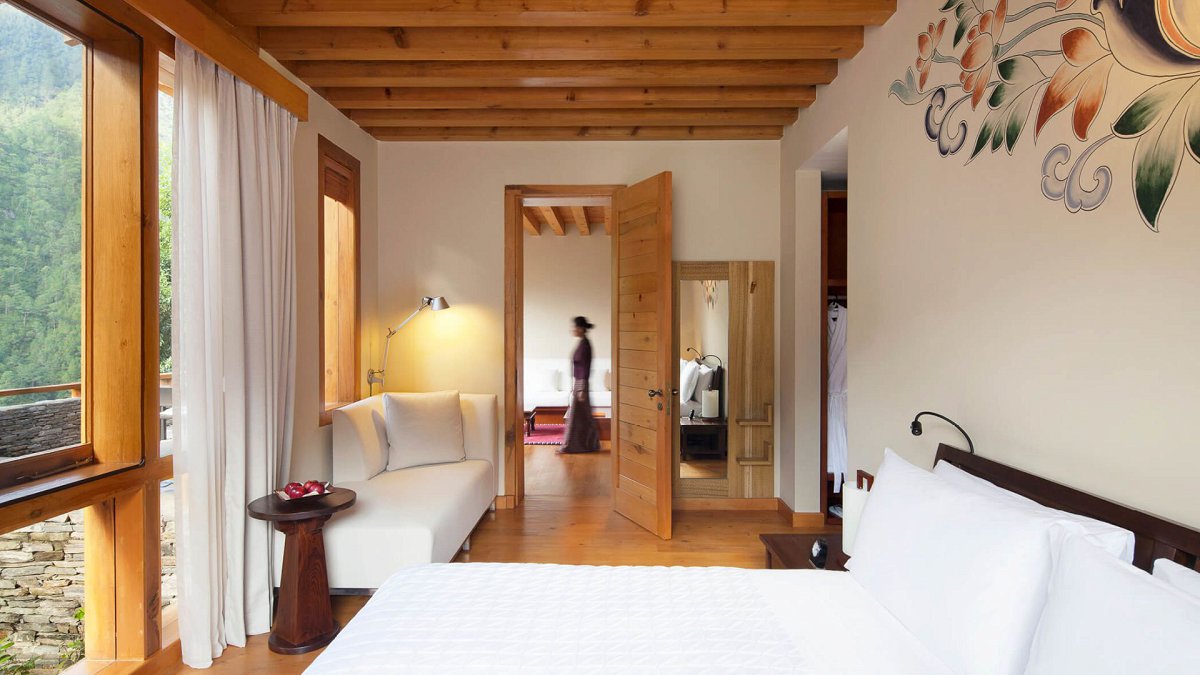
Guest spaces balance minimalist lines with crafted detail: sheesham-wood furniture, hand-painted Bhutanese murals, and pale textiles that amplify natural light. Valley Rooms are calm, airy sanctuaries with floor-to-ceiling glazing, small sitting nooks, and generous bathrooms—many with deep soaking tubs angled to the views. One-bedroom villas add separate living rooms and French windows that open to small garden terraces where hydrangea and rhododendron edge the scene. The aesthetic is soothing rather than showy, but thoughtful touches—handmade bedcovers, well-placed reading lamps, and cross-breezes from the river—make the spaces feel quietly luxurious.

Dining

Meals center on Bukhari, the lodge’s fireplace-warmed dining room where seasonal produce from the Punakha Valley anchors the cuisine. Evenings typically offer a Bhutanese path—think Ema Datshi, buckwheat momos, and a daily curry—alongside a western-leaning selection of soups, pastas, and grilled fish or meat. Reviewers often call out comforting signatures such as sautéed Gasa potatoes and restorative broths with tofu, riverweed, and mushrooms from the wellness-minded Shambhala repertoire. Breakfast is generous and unhurried: freshly baked pastries, pressed juices and lassis, house granola and yogurt, and made-to-order plates from ricotta pancakes to red-rice porridge. The approach is unfussy, ingredient-forward, and adaptable to vegetarian or gluten-free preferences.

Wellness & Experiences

The heart of restoration here is the COMO Shambhala Retreat, whose treatment rooms look out over river and fields. The standout ritual is the traditional Bhutanese hot-stone bath: heated river rocks, dropped into a wooden tub infused with artemisia leaves, crack and release minerals that ease travel-tired muscles, followed by a long-stroke COMO Shambhala massage. Gentle yoga and guided breathwork round out the program. Outside, the valley is your gym and gallery—soft-gradient hikes to Khamsum Yulley Namgyal Chorten, contemplative visits to the 17th-century Punakha Dzong, and strolls through farm hamlets where chilies dry along whitewashed walls. When river levels allow, mellow rafting or kayaking on the Mo Chhu adds a different lens on the landscape.

Because Punakha sits around 1,400 meters, the air is kinder than in higher towns; days can be warm even as mountain horizons stay snow-bright. Many travelers pair time here with Paro for a balanced route of culture and easier acclimatization.

Logistics & Who It’s For

Reaching the lodge is part of the pleasure: a road journey of roughly four to six hours from Paro, often over the prayer-flagged heights of Dochu La, with broad Himalayan views en route. Once arrived, the mood is deeply unhurried. This property suits design-conscious travelers seeking nature, couples chasing quiet, and wellness-minded guests who value ritual over spectacle. Small scale means attentive pacing—picnic breakfasts after early temple walks, late-afternoon massages, slow dinners by the hearth.

Ultimately, COMO Uma Punakha trades theatrics for intimacy. The rewards are cumulative: dawn light across the paddies, steam lifting from a hot-stone bath, the subtle heat of Bhutanese chilies at dinner. It’s a stay that embeds you in the valley’s rhythms—and lingers well beyond checkout.

Select Amenities & Features

Free Wi-Fi Free Wi-Fi
Yoga Yoga
Spa & wellness Spa & wellness
Laundry & dry cleaning Laundry & dry cleaning
Airport transfer Airport transfer
Restaurant Restaurant

Please note: This is not an exhaustive list of amenities.

Location

How to Get There

By Air
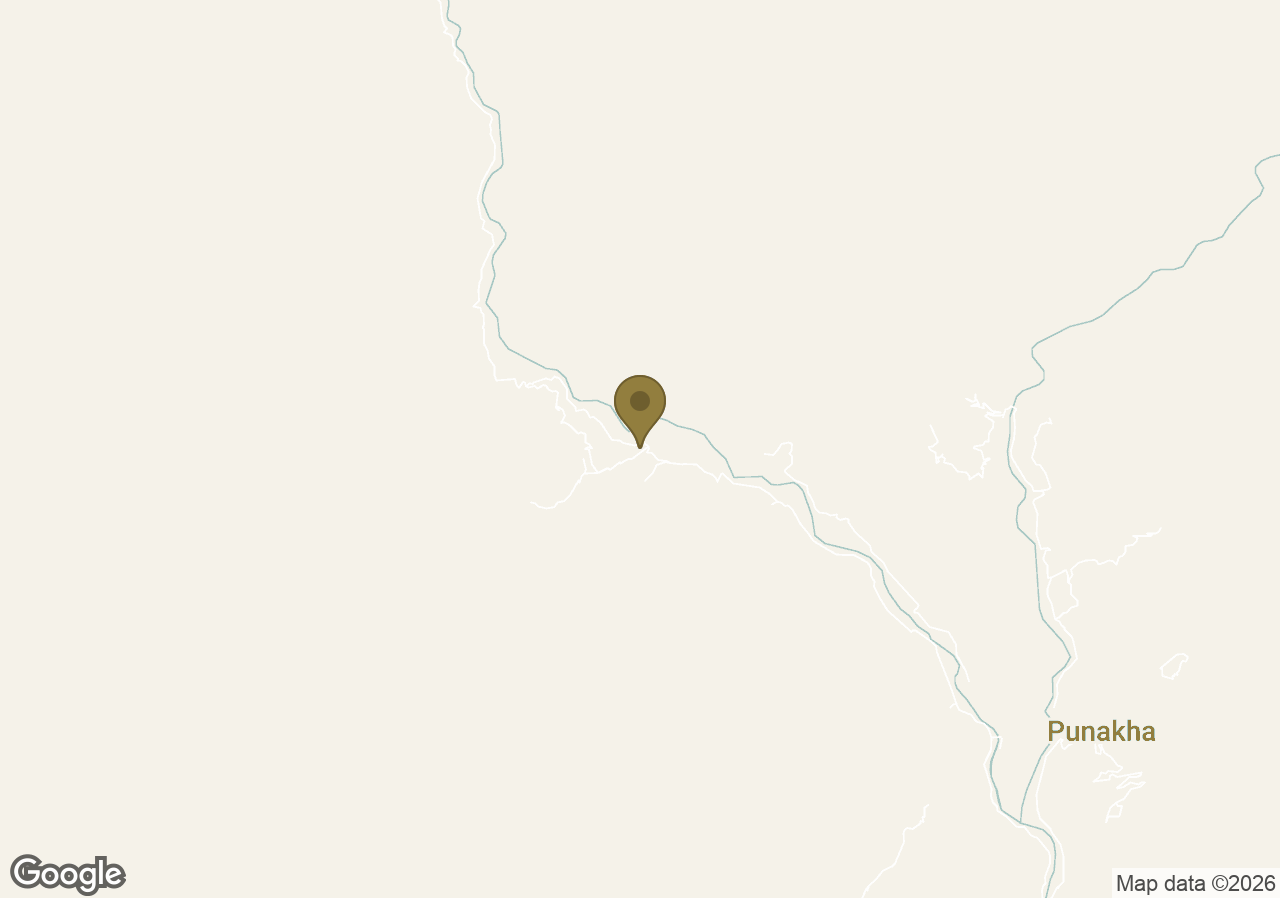
  • (PBH) Paro International Airport: closest major airport; ~3.5–5 hours by road to the lodge (≈120–130 km; traffic dependent).
  • (IXB) Bagdogra Airport, India: fly, then drive to Phuentsholing (~4–5 hours/≈160 km), continue by road to Punakha ~6.5–8 hours from the border (≈210–245 km).
By Train
  • Hasimara (HSA), India: nearest railhead; Hasimara → Phuentsholing ~30–45 minutes by car (≈17 km), then Phuentsholing → Punakha ~6.5–8 hours by road (≈210–245 km).
By Road
  • From Thimphu: ~2.5–3 hours (≈70–80 km), via Dochula Pass; mountain roads, conditions permitting.
  • From Paro: ~3.5–5 hours (≈120–130 km), traffic and pass conditions dependent.
From Punakha Dzong
  • ~20 minutes by car to the lodge.
By Helicopter/Charter
  • Royal Bhutan Helicopter Services to Zomlingthang helipad (Punakha); typical Paro → Punakha valley flight ~1–1.5 hours, then ~20 minutes by road to the lodge (weather and prior arrangement required).

Note: Travel times are approximate and may vary with traffic and season.

Nearby Places & Attraction

Punakha Dzong
  • Bhutan's second-oldest fortress and former capital, positioned at the confluence of Pho Chhu and Mo Chhu rivers with whitewashed walls and jacaranda trees.
  • Distance: ≈10 km
  • Mode: Car; ~20 minutes
  • Best time: Spring (Mar–May) for jacaranda blooms; mid-Nov to May for monk residence viewing
  • Tip: Access is via traditional wooden bridge; modest dress required for temple areas.
Punakha Suspension Bridge
  • One of Bhutan's longest suspension bridges at 160 meters, draped with prayer flags and spanning the Po Chhu River near the dzong.
  • Distance: ≈11 km
  • Mode: Car to parking area; ~5–10 minute walk
  • Best time: Early morning or late afternoon for softer light and valley views
  • Tip: Trail can be muddy in summer; winter offers drier conditions but dusty paths.
Chimi Lhakhang
  • Hilltop fertility temple dedicated to the Divine Madman, reached by a scenic walk through rice fields and the village of Sopsokha.
  • Distance: ≈20 km
  • Mode: Car to Sopsokha village; ~20–30 minute walk through fields
  • Best time: Oct–Apr for pleasant weather; harvest season offers golden field views
Khamsum Yulley Namgyal Chorten
  • Three-tiered hilltop temple built by the Queen Mother in the 1990s, offering panoramic views of Punakha Valley and rice terraces.
  • Distance: ≈10 km
  • Mode: Car (~30 minutes); hike through pine forest and fields (~45–60 minutes)
  • Best time: Sep–Oct for clear skies; early morning to avoid midday heat
Dochula Pass
  • Mountain pass at 3,100 meters featuring 108 memorial chortens and panoramic Himalayan views including Gangkar Puensum, Bhutan's highest peak.
  • Distance: ≈30 km
  • Mode: Car; ~45 minutes to 1 hour
  • Best time: Dec–Feb for clearest mountain views; spring for rhododendron blooms
  • Tip: Arrive early morning for best visibility; temperatures 5–10°C cooler than valley; bring layers.

General Tip: Punakha sits at a lower elevation than Paro or Thimphu, offering warmer weather year-round and serving as Bhutan's winter capital for the monk body from mid-November to April.

Seasonality Overview

Super-peak
  • Oct–Nov: clear, dry skies; highest demand; book well ahead.
  • Late Dec–early Jan: holiday travel; stricter policies may apply.
Peak
  • Feb–Apr: dry, mild days; busy sightseeing season in the valley.
  • Rates often at their upper range; limited room flexibility.
Shoulder
  • May: warmer afternoons; humidity rises as monsoon approaches.
  • Sep: rains ease; variable weather; generally moderate demand.
Low/Off
  • Jun–Aug: monsoon showers and humidity; plans often weather-dependent.
  • Lower demand overall; occasional rain-related activity disruptions.

Note: Month windows are indicative and may change year to year.

Other Information

Theme: Waterfront, Mountain, Hills, Wilderness, Countryside, Healing & Wellness
Check-in time: After 2:00 PM
Check-out time: Until 12:00 PM
Number of rooms: 10

Explore More Hotels